- 0 views
- By Caroline McNally
Why HVDC Is the Power Grid’s Game-Changer
As the global energy system undergoes a once-in-a-century transformation, modernizing our electricity networks is essential. High‑Voltage Direct Current (HVDC) transmission has emerged as a foundational technology unlocking that transformation—and here’s why.
1. Long-Distance Efficiency & Renewable Integration
HVDC systems transmit electricity over hundreds or even thousands of kilometers with far lower losses than traditional Alternating Current (AC) lines. While AC lines—especially under sea or underground—suffer from reactive losses and skin effect, modern HVDC installations can cut transmission losses roughly in half, making them far more efficient over long-distance routes (CLOU GLOBAL).
This performance is particularly valuable when linking vast renewable energy sources—such as offshore wind farms or remote solar and hydro sites—to demand centers. HVDC lets you send bulk clean power efficiently and at scale where it’s needed most (thinkgrid.grid.gevernova.com, CLOU GLOBAL, peaknano.com).
2. Bridging Asynchronous Grids & Enhancing Flexibility
Where traditional AC systems struggle to interconnect unsynchronized grids (e.g. different regional frequencies), HVDC shines. It enables controlled power flow between asynchronous networks without requiring identical frequencies or phases—a huge advantage for cross-border energy sharing and regional resilience (Wikipedia).
Modern HVDC developments are moving well beyond simple point-to-point links. Multi-terminal networks now allow several nodes to interconnect, forming “electronic highways” that balance resources, improve redundancy, and build more resilient, integrated grids (thinkgrid.grid.gevernova.com).
3. Policy, Resilience, and Grid Modernization Trends
Recent energy policy discourse positions HVDC as a core pillar of grid modernization and resilience strategies. Analyses emphasize its role in easing congestion in high-demand areas, maximizing grid stability, and facilitating broader clean energy deployment—all while reducing long‑run costs (Utility Dive).
In the U.S., the Department of Energy’s HVDC Cost Reduction (CORE) initiative is funding research and manufacturing scale-up to make HVDC cost‑competitive and domestically producible—aiming to lower transmission deployment costs by over a third (The Department of Energy’s Energy.gov).
4. Global Real‑World Deployments
Major HVDC projects already illustrate this technology’s transformative impact:
- Eastern Green Link (UK): Two planned submarine HVDC cables connecting Scotland and Northeast England, each rated at 2 GW and operating at ±525 kV, designed to alleviate grid bottlenecks and channel renewable wind energy to demand centers (Wikipedia).
- Western HVDC Link (UK): A 600 kV, 422 km subsea cable connecting Scotland and Wales with capacity of over 2 GW—now operational—demonstrating real-world success at scale (Wikipedia).
- Champlain–Hudson Power Express (USA/Canada): A planned 1,200 MW HVDC route linking Québec hydropower to New York City by 2026, expected to cut regional emissions and energy costs significantly (Wikipedia).
These projects exemplify how HVDC helps governments and utilities meet energy targets while addressing environmental and economic goals.
5. Challenges, Trade‑offs, and Strategic Perspectives
HVDC systems require expensive converter stations—each designed for specific projects—and their complexity can limit fault tolerance or availability compared to matured AC infrastructure. They also demand specialized spares and expertise (Wikipedia).
Yet when transmission spans long distances, links asynchronous grids, or carries submarine cables, the upfront costs are outweighed by gains in efficiency, reduced land footprint, reliability, and control.
Strategically, hybrid approaches are emerging—for example, converting existing AC corridors to DC where possible, preserving landscapes while achieving capacity growth with fewer new lines. This can help build public support and reduce permitting friction (peaknano.com, arxiv.org).
The Core Benefits at a Glance
| Metric | HVDC Advantage |
|---|---|
| Transmission losses | ~3% per 1,000 km vs. 6–8% for AC lines (Wikipedia) |
| Compatibility | Links grids with different frequencies or desynchronized clocks |
| Capacity | High-throughput corridors—multi-GW links over long distances |
| Control & stability | Fine-grained power flow control boosts resilience |
| Infrastructure footprint | Less land disruption and fewer towers compared to AC |
Looking Ahead: HVDC as the Backbone of a Renewables‑Powered Grid
HVDC is more than just a transmission technology—it’s a strategic enabler of the clean energy era. Projects like Eastern Green Link and Champlain–Hudson underscore how governments and developers are investing in HVDC to deliver renewable power efficiently, stabilize interconnected grids, and reduce long-term costs.
In the U.S., initiatives like CORE and emerging policy frameworks envision HVDC as a core layer of a national transmission macrogrid—akin to an interstate highway system for electrons, integrating renewable power across regions (Utility Dive).
As power electronics, converter designs, and digital control systems mature, HVDC nodes become more interoperable—and multi‑terminal networks approach real-world implementation. The result? A resilient, low‑carbon, flexible grid that aligns with global climate goals—and delivers at scale.
Final Thought
The energy transition isn’t just about more renewables—it’s about smarter, stronger networks. HVDC is the powerhouse behind this vision, transforming how electricity flows across countries, seas, and grids. It’s the high‑voltage highway that helps clean energy go the distance.


Related articles and news
 Infrastructure
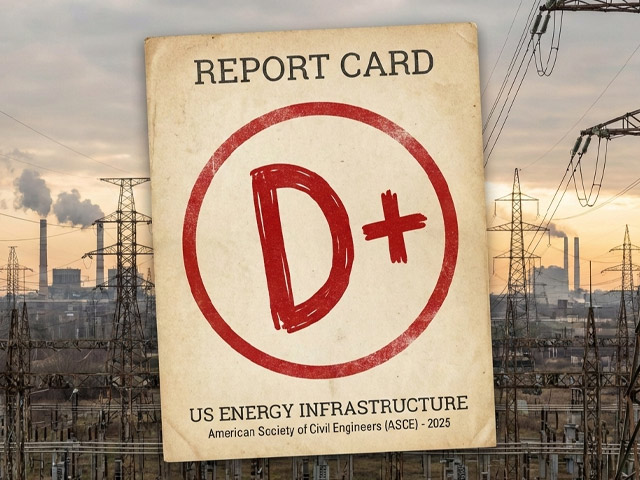
 America’s Aging Energy Infrastructure: Can the U.S. Avoid Another Downgrade?
The U.S. energy grid is under pressure like never before. Aging equipment, surging demand, and climate‑driven threats have pushed the nation’s energy …
Read more Innovation
 The Fiber Frontier: What 2026 Could Reveal About the Next Leap in Internet Technology
The world of fiber-optic connectivity is gearing up for a defining year in 2026. What was once viewed primarily as a faster alternative to copper broa …
Read more